


A hiking headlamp is the one piece of gear that turns a late finish from a crisis into a slow walk home. Lose the light an hour from the trailhead without one, and a trail you know by heart becomes a maze of roots, wet rock and guesswork.
The good news is that the gap between a cheap light and a great one has never been easier to close. Modern LEDs and lithium batteries mean a 70-gram lamp can now throw usable light farther than a car-sized lantern did a generation ago. The hard part is the spec sheet, which is built to sell rather than to inform.
This guide cuts through it. Below you’ll find the 10 best headlamps for hiking right now, matched to the kind of hiker you are, plus clear answers on lumens, red light, batteries and the Fenix vs Petzl question that fills so many forum threads.

Why the Right Hiking Headlamp Matters
Most people buy their first hiking headlamp the night before a trip, grab whatever is cheapest, and only find out what’s wrong with it on a steep descent in the dark. The beam is a narrow spotlight that hides the ground at your feet. The strap slides down your forehead every few minutes. The battery dies at 8 p.m. because the box quoted runtime on a setting nobody actually walks with.
None of that is a disaster on a campsite. On a mountain it is. Darkness slows you down, cold arrives faster than you expect, and fatigue makes small trips into twisted ankles. A good headlamp for hiking doesn’t remove those risks, but it gives you the margin to deal with them calmly.
The job is bigger than “make light”. A hiking headlamp has to light your next three steps and the trail marker 50 meters ahead. It has to last for the whole night you didn’t plan for. It has to keep working in rain, survive being dropped, and be easy to operate with cold fingers and gloves on.
That’s why this guide is organized around jobs, not just a ranking. A thru-hiker counting grams, a trekker heading to the Himalaya and a weekend walker who only needs light for the last mile all deserve different answers. Each pick below says who it suits and who should skip it.
How we chose these picks
We compared manufacturer spec sheets measured to the ANSI/PLATO FL 1 standard, long-term reviews from UK and US gear testers, and owner feedback on durability, comfort and battery ageing. Each light had to meet a few non-negotiables:
- At least 300 lumens on max and a usable 100 to 250 lumen setting for walking
- A dimmable or low mode for camp and map reading
- Some level of water resistance (IPX4 or better)
- A lock function or a design that won’t switch on inside a pack
- A reputation for holding up after a season of real use, not just on day one
Prices are approximate and move with sales, so check the retailer before you buy. If you’ve used any of these lamps yourself, the comments are open: real trail reports help other readers more than any spec sheet.
Best Headlamps for Hiking at a Glance
| Headlamp | Best for | Max lumens | Weight | Water rating | Approx. price |
|---|---|---|---|---|---|
| Petzl Swift RL | Best overall | 1,100 | 100 g | IPX4 | $140 |
| BioLite Range 400 | Best all-rounder | 400 | 68 g | IP67 | $60 |
| Black Diamond Storm 500-R | Bad weather and long nights | 500 | 100 g | IP67 | $75–90 |
| Fenix HM65R V2.0 | Trekking and maximum power | 2,200 | 144 g | IP68 | $140 |
| Petzl Actik Core 625 | Hybrid batteries for travel | 625 | 88 g | IPX4 | $85 |
| Nitecore NU25 MCT UL | Ultralight value | 400 | 47 g | IP66 | $40 |
| Fenix HM50R V2.0 | Compact and tough | 700 | 78 g | IP68 | $60 |
| Black Diamond Spot 450 | Everyday dual-fuel workhorse | 450 | 86 g | IPX7 | $50 |
| Black Diamond Astro 300-R | Best budget pick | 300 | 75 g | IPX4 | $35–45 |
| Petzl Swift LT | Backup and fastpacking | 380 | 43 g | IPX4 | $55 |
The 10 Best Headlamps for Hiking, Reviewed
Each review covers what the lamp does well, where it falls short, and the type of hiker it fits. If you only read one entry, read the first two: between them they cover the needs of most people looking for the best headlamp for hiking.
1. Petzl Swift RL: best headlamp for hiking overall
The Swift RL is the hiking headlamp other brands measure themselves against, and it has collected best-in-test awards from UK gear magazines several years running. It puts out around 1,100 lumens with a beam that reaches about 155 meters, yet weighs roughly 100 grams with its built-in 2,350 mAh battery.
Its party trick is Reactive Lighting. A sensor reads the light bouncing back and adjusts brightness and beam shape on its own: look down at your boots and the light softens and widens, look up toward a ridge and it sharpens and throws farther. That saves battery and removes the constant button-pressing that tires you out on technical ground. If the automatic changes annoy you on rocky climbs, a long press switches to Standard Lighting with fixed, predictable output.
Everything runs from one button, including the lock. Charging is USB-C, the split headband stays put on steep descents, and a small pouch turns it into a tent lantern.
- Why it stands out: brightness, smart beam control and comfort in one light package
- Watch out for: IPX4 means rain-resistant, not waterproof; the price is high
- Best for: night hikers, early alpine starts, anyone who wants one lamp for everything
2. BioLite Range 400: best all-round hiking headlamp
If you want the best headlamp for hiking without paying flagship money, the Range 400 is the easy recommendation. You get 400 lumens, a 90-meter spot, a white flood for foot placement and a dimmable red mode, all in a 68-gram unit built into a moisture-wicking band.
The feature people talk about most is rapid charging. Eight minutes on a USB-C cable gives about an hour of light, which rescues anyone who realizes at the trailhead that they forgot to charge it. A full charge takes about 90 minutes, and you can expect around six hours on high and far longer on the lower settings you’ll actually walk with.
It’s also rated IP67, so it’s dustproof and survives a dunk, which is rare at this price. There’s no battery pack on the back of your head, so there’s nothing to bounce.
- Why it stands out: modern features, full waterproofing and a fair price
- Watch out for: 90 meters of throw is enough for trails, less so for open ridgelines at speed
- Best for: most day hikers and backpackers who want one dependable light
3. Black Diamond Storm 500-R: best headlamp for overnight hikes and bad weather
When the forecast turns ugly, the Storm 500-R is the lamp to reach for. It’s rated IP67, so rain, sleet and a slip into a stream won’t kill it. The 2,400 mAh battery is larger than most rivals, giving around seven hours at 500 lumens and up to 350 hours on its lowest setting.
That runtime makes it one of the best headlamps for hiking at night across several days. Add PowerTap, which jumps to full brightness with a tap on the side and drops back again, and you have a quick way to scan a junction without cycling through modes. Beyond white and red, you also get green and blue. Green is handy for reading a map without bothering the people around you.
The main drawback is the charging port. It still uses micro-USB, so you’ll need to carry an extra cable if everything else you own is USB-C. The two-button control takes a trip or two to learn.
- Why it stands out: proper waterproofing and huge runtime
- Watch out for: micro-USB charging; the built-in battery can’t be swapped for AAAs
- Best for: overnight hikes, shoulder seasons, wet climates, long backpacking trips
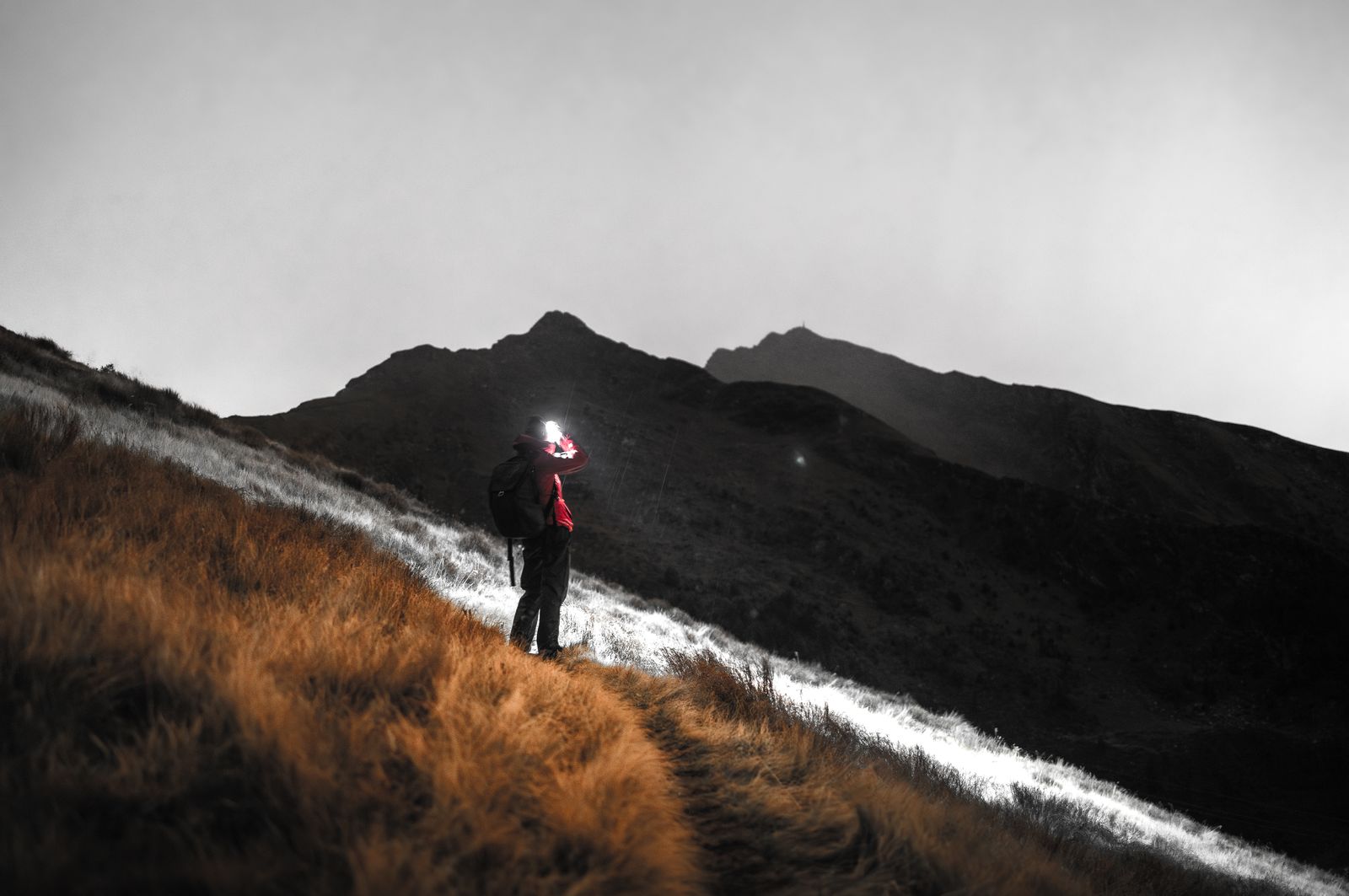
4. Fenix HM65R V2.0: best headlamp for trekking and raw power
Fenix comes from the flashlight world, and the HM65R V2.0 shows it. The body is magnesium alloy, lighter than aluminum but still rugged, and it’s rated IP68 with two meters of impact resistance. Independent spot and flood LEDs can combine for up to 2,200 lumens and a throw of around 230 meters.
On multi-week treks that power matters less than the battery. The lamp runs on a swappable 3,400 mAh 18650 cell charged through a sealed USB-C port, so you can carry a spare and swap it in seconds. A dedicated red light with three levels and a flash mode comes on with a quick double-tap, and an electronic lockout stops it firing up in your pack.
At 144 grams with battery and band, it’s heavier than most picks here, and the dual-switch layout isn’t as simple as Petzl’s single button. In return you get a lamp that shrugs off weather, cold and drops.
- Why it stands out: extreme brightness, metal build and a swappable cell
- Watch out for: weight; more output than most trail hikers need
- Best for: trekking, winter mountains, search-and-rescue-style use, off-trail navigation
5. Petzl Actik Core 625: best hybrid headlamp for trekking abroad
The Actik Core is the lamp to pick if you travel to places where charging is unreliable. Petzl’s Hybrid Concept means it runs on the included 1,250 mAh CORE rechargeable pack or on three standard AAA batteries, which you can buy in almost any village shop on a trekking route.
Output tops out at 625 lumens with a beam of about 115 meters, and the lowest mode stretches to roughly 100 hours. It weighs 88 grams, charges via USB-C, and the single top button is easy to find even with gloves. There’s a red mode, a battery indicator and a glow-in-the-dark housing that makes it easy to find in a dark tent.
Testers have flagged two niggles: the IPX4 rating lags behind rivals like the Storm, and the jump between the middle and high settings is bigger than ideal.
- Why it stands out: power flexibility, simple controls, proven reliability
- Watch out for: only splash-resistant; no rear red light
- Best for: multi-day treks, international trips, hut-to-hut routes
6. Nitecore NU25 MCT UL: best ultralight value headlamp
At 47 grams including the band, the NU25 MCT UL is one of the lightest serious lamps you can buy, and it costs around $40. It still delivers 400 lumens with a 132-meter throw, which is more than enough for most trails.
What makes it unusual is color temperature. You can switch between warm (3000K), neutral and cool white, plus red. Warm light cuts through fog and drizzle better and is easier on tired eyes late at night, while cool white gives crisper terrain detail on clear nights. Few lights at any price give you that choice.
Expect about 2 hours 40 minutes on high and up to 45 hours on the lowest mode, with USB-C charging and an IP66 rating against rain and dust. The trade-offs are a cord-style band that can slip and small buttons that take practice with gloves on.
- Why it stands out: featherweight, cheap and genuinely bright
- Watch out for: fiddly controls; short runtime at full power
- Best for: thru-hikers, fastpackers, gram counters on a budget
7. Fenix HM50R V2.0: best compact and rugged hiking headlamp
The HM50R V2.0 packs Fenix toughness into a 78-gram hiking headlamp. It’s rated IP68 and impact-resistant to two meters, with a top output of 700 lumens and a 115-meter beam. The real-world modes are well spaced: 30, 130 and 400 lumens for walking, plus a red light for camp.
Two details make it stand out for cold-weather hikers. First, the light unit slides out of its holder and works as a right-angle flashlight with a pocket clip. Second, you can swap the rechargeable 16340 cell for a CR123A lithium battery, which keeps working far below freezing.
Runtime on turbo is short, about an hour, so treat 700 lumens as a burst. On the 130-lumen setting you’ll get around eight hours, which covers most nights out.
- Why it stands out: compact, nearly indestructible, works as a flashlight too
- Watch out for: turbo drains the small cell fast
- Best for: winter hikers, scramblers, anyone hard on their gear
8. Black Diamond Spot 450: best everyday dual-fuel headlamp
The Spot has been a trailhead favorite for years, and the Spot 450 is the most versatile version yet and one of the best headlamps for hiking under $60. It runs on three AAAs or Black Diamond’s rechargeable BD 1500 battery, which charges inside the lamp over USB-C (the rechargeable pack is often sold separately, so check the listing).
It’s rated IPX7, waterproof to one meter for 30 minutes, and offers flood, spot, dimming, red, green and blue light, strobe and SOS. PowerTap gives instant full output with a tap on the housing, and brightness memory brings you back to your last setting when you switch on.
At 86 grams it’s not the lightest, and the battery sits at the front, so it feels slightly nose-heavy compared with rear-battery designs. For the price, though, it’s hard to find more features.
- Why it stands out: waterproofing, dual-fuel power and lots of modes
- Watch out for: front-heavy feel; rechargeable battery may cost extra
- Best for: weekend hikers and campers who want one do-it-all light
9. Black Diamond Astro 300-R: best budget headlamp for outdoor use
If you need the best budget headlamp for outdoor use, this hiking headlamp gets the basics right for around $35 to $45. It has one lens, one button, 300 lumens on max and an integrated 1,500 mAh battery rated for about six hours on high and 140 hours on low under FL 1 testing.
Brightness memory means it doesn’t blast you with full power every time you turn it on, and a digital lock keeps it from draining in your pack. The recycled elastic band is comfortable, and the IPX4 rating handles rain.
The compromises are clear: micro-USB charging, a 55-meter beam that’s fine for trails but short for open ground, and no red mode. Still, it’s a huge step up from no-name lights with inflated claims.
- Why it stands out: simple, reliable, cheap
- Watch out for: no red light; older charging port
- Best for: beginners, occasional night walkers, a spare for the car or a family member
10. Petzl Swift LT: best backup headlamp and fastpacking pick
Every serious hiker should carry a second light, and the Swift LT is the backup hiking headlamp to clip into your lid pocket. It weighs 43 grams, makes 380 lumens with a wide, even beam, and charges over USB-C.
The three white levels are sensibly spaced: about 7 lumens for slow walking and camp, 100 for general trail use and 380 when you need it. It’s low-profile enough to wear under a beanie, and the shock-cord band stays put better than most ultralight rivals.
There’s no spot mode, the beam tops out at around 70 meters, and the red light is very dim. That’s fine for a backup or for forested trails, but not for fast descents in open country. If you want something even lighter, the Petzl Bindi weighs about 35 grams with 200 lumens.
- Why it stands out: tiny, light and trustworthy
- Watch out for: limited throw; IPX4 only
- Best for: backups, fastpackers, trail runners who also hike
How Many Lumens Should a Hiking Headlamp Be?
Lumens measure the total light a lamp puts out, and they’re the first number on every box. The honest answer is that you need far fewer than marketing suggests, but you need them for longer.
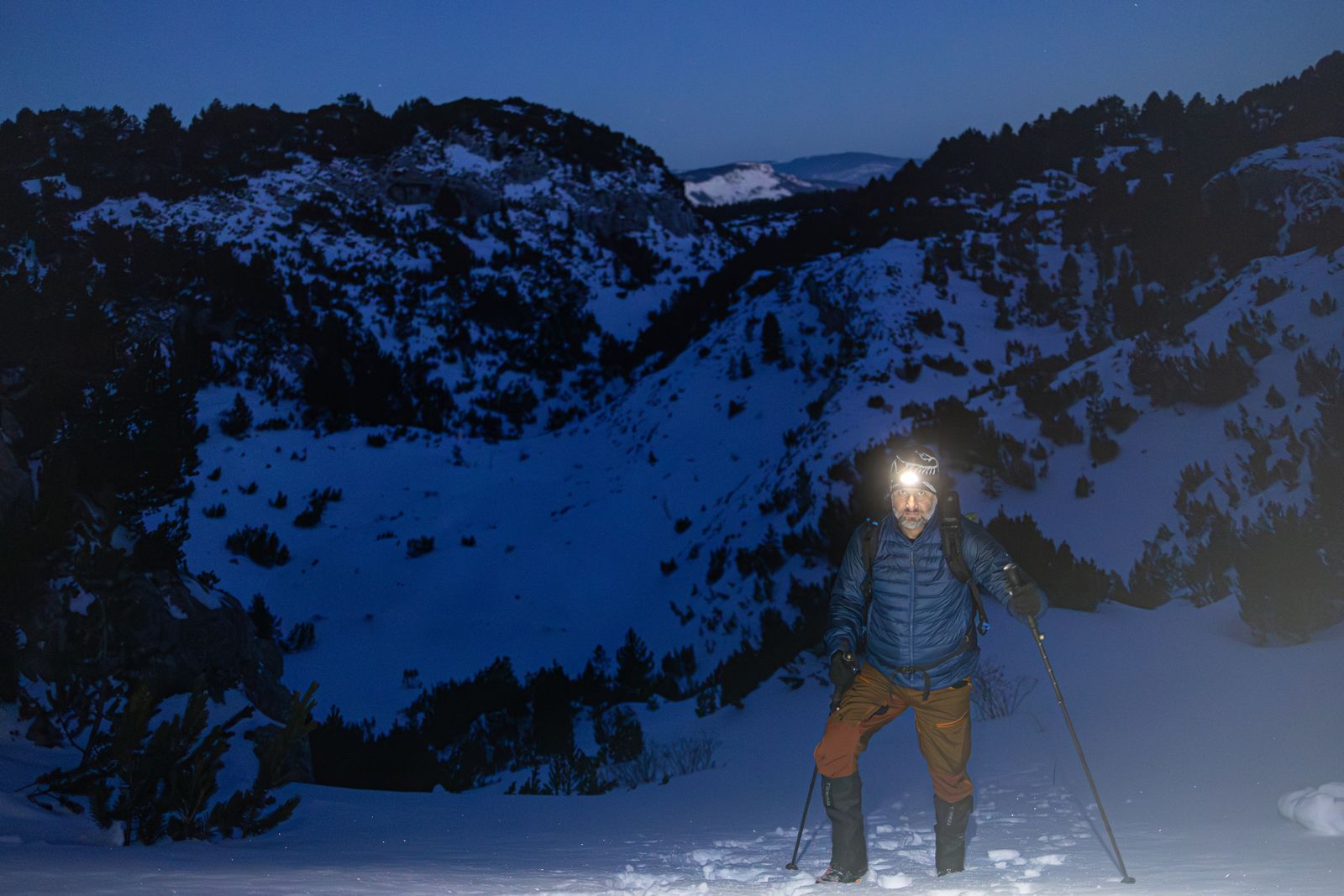
Here is a practical guide to choosing brightness for a hiking headlamp:
- 50 to 150 lumens: camp chores, reading, cooking, walking a wide and easy path
- 150 to 300 lumens: most night walking on established trails; the setting you’ll use 80% of the time
- 300 to 500 lumens: fast hiking, rough or rocky ground, route finding, bad visibility
- 500 lumens and up: technical descents, off-trail navigation, scanning for distant markers, emergencies
So a headlamp for hiking should offer at least 300 lumens on max, but the setting that really matters is the one between 100 and 250. That’s where you’ll spend your night, and it’s the runtime at that level you should compare between models.
Reading the ANSI numbers on the box
Most reputable brands publish specs to the ANSI/PLATO FL 1 standard, which is what makes comparisons fair. Two definitions catch people out:
- Runtime is measured until output drops to 10% of the starting level. A 300-lumen lamp “lasting 6 hours” may be giving you 30 lumens by hour five.
- Beam distance is where the light falls to 0.25 lux, roughly the brightness of a full moon. That’s the edge of usefulness, not a clear view.
Many lamps also step down from their highest setting after a few minutes to manage heat, so a 1,500-lumen figure is often a short burst. Be wary of cheap lights claiming 5,000 lumens for $15 with no FL 1 logo: those numbers are usually invented.
Spot, flood or mixed beam?
Beam shape matters as much as brightness. A spot beam throws far and helps you pick out cairns, trail blazes and the next switchback. A flood beam lights a wide circle at your feet, which is what keeps you upright on roots and rocks. For hiking, a mixed beam or a lamp with separate spot and flood modes is the most useful. A 400-lumen lamp with a balanced beam often feels brighter on a forest trail than a 1,000-lumen lamp with a tight spot.
Why Hikers Use Red Light at Night
Almost every hiking headlamp now has a red mode, and it isn’t a style choice. It’s about protecting your night vision, which takes a surprisingly long time to build and a moment to destroy.
Your eyes have two types of light-sensitive cells. Cones handle color and detail in bright light. Rods handle low light and peripheral vision, and they rely on a pigment called rhodopsin. In darkness, rhodopsin slowly builds up, and after 20 to 40 minutes your night vision is close to its peak. A few seconds of bright white light breaks that pigment down, and the clock starts again.
Rhodopsin is much less sensitive to long red wavelengths. A dim red light lets your cones read a map or find your stove while your rods stay dark-adapted. The National Park Service explains the biology in its guide to dark adaptation and the value of red flashlights, and notes that a dim red light works better than a bright one, because even red LEDs leak some other wavelengths.
When to switch to red
- At camp: cooking, sorting gear and chatting without blinding your tentmates
- Map and phone checks: a quick look without wrecking your eyes for the next mile
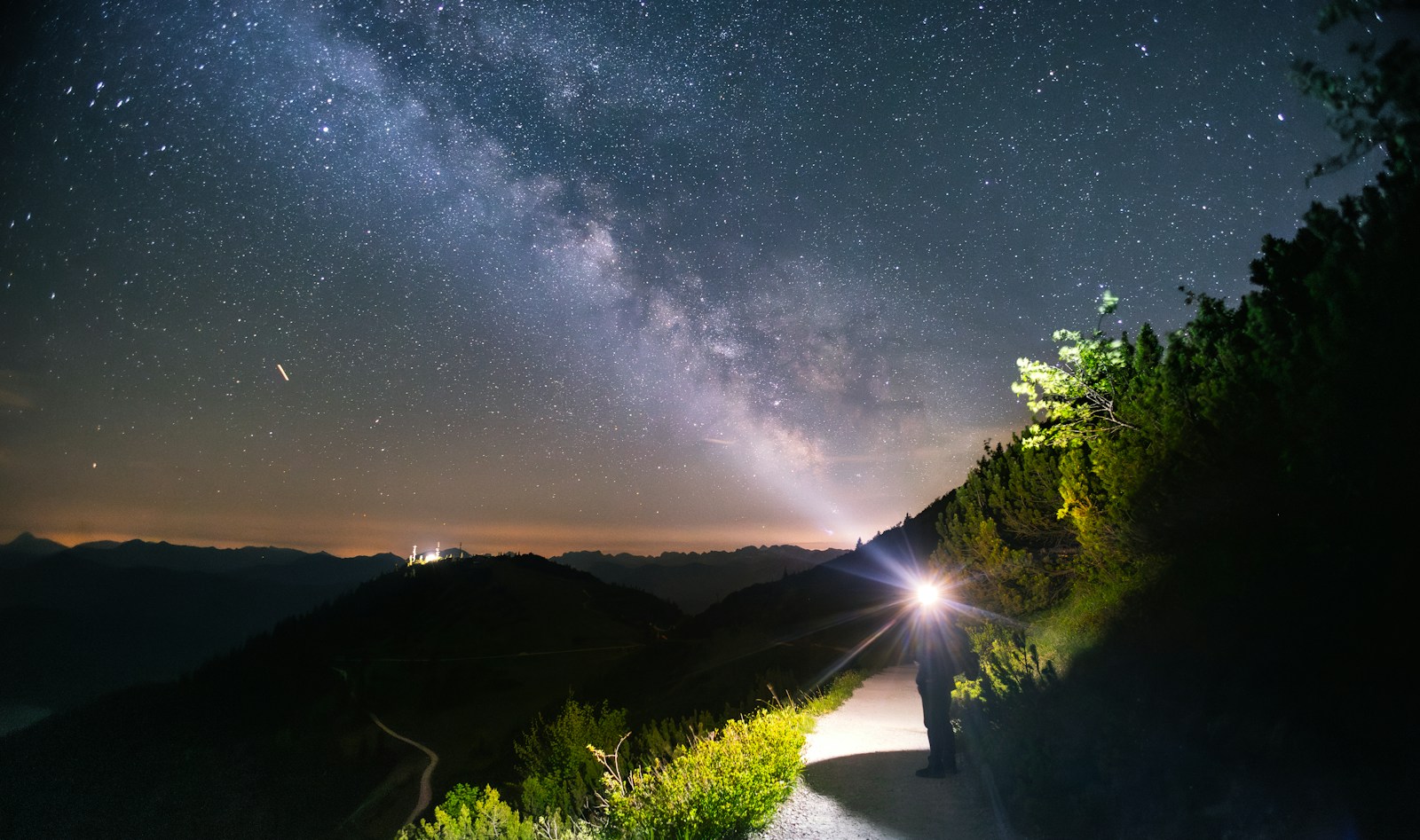
- Stargazing: keeping your eyes adapted for faint stars and the Milky Way
- Group hikes: red is far kinder to the person walking behind you
- Huts and bothies: early starts without waking the whole room
The Leave No Trace dark-sky guidelines add another reason: lower, warmer light disturbs wildlife and other visitors less. Red won’t light up a trail well enough for fast walking, though, so use white on the move and switch to red when you stop.
How to Choose a Headlamp for Hiking: Battery, Weight and Weatherproofing
Once you’ve settled on brightness and beam, four details decide whether a headlamp for hiking earns a place in your pack or ends up in a drawer.
Battery type and charging
Built-in lithium batteries are light, efficient and cheap to run, and USB-C makes charging from a power bank simple. The downside is that once they’re flat, they’re flat. Hybrid or dual-fuel lamps like the Actik Core and Spot 450 accept AAAs too, which is a real safety net on long trips or in remote countries.
Swappable lithium cells, as in the Fenix models, give you the best of both: rechargeable power and the option to carry a spare. In very cold weather, all lithium-ion batteries lose capacity, so keep the lamp or spare cell in an inside pocket overnight. Lithium primary cells such as CR123A cope with frost far better.
Weight and fit
Most hiking headlamps weigh 45 to 110 grams. Under 60 grams is ideal for backups and fastpacking. Heavier lamps with a rear battery or top strap balance better on fast descents. Whatever you choose, try it on with a hat. A sun cap or a warm beanie changes how the band sits, which matters if you pair your lamp with one of the best hiking hats for long days in the hills.
Water and dust ratings
IP ratings tell you how well a lamp resists the elements. The first digit is dust (X means not tested), the second is water.
- IPX4: splash- and rain-resistant, fine for most three-season hiking
- IP66/IPX6: heavy rain and water jets
- IP67/IPX7: survives immersion to one meter for 30 minutes
- IP68: submersion beyond one meter, usually two
If you hike in wet climates or in shoulder seasons, an IP67 or IP68 lamp is worth the small extra cost.
Controls and lock mode
You’ll use your headlamp tired, cold and sometimes in a hurry. One large button beats several small ones, and brightness memory saves you from cycling through strobe modes in the dark. A lock function is essential: a lamp that turns itself on in your pack is a dead lamp when you need it.
Best Headlamps for Hiking at Night: Habits That Matter More Than Specs
Even the best headlamps for hiking at night only work if you use them well. These habits come up again and again in mountain rescue advice and from experienced night hikers.
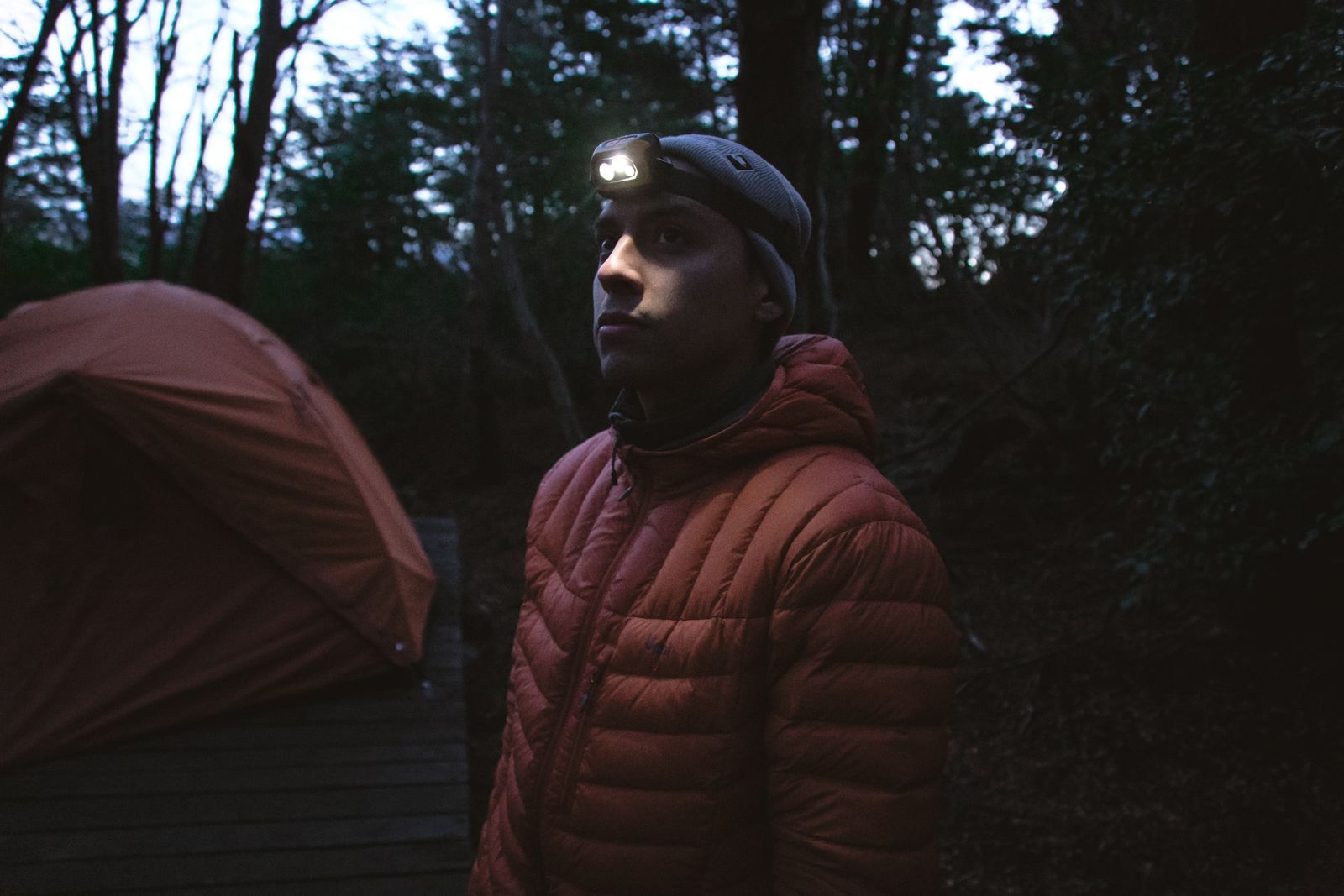
- Charge before every trip. The best lamp in the world is useless with a dead battery. Top it up the night before, even for a day hike.
- Carry a backup. A 40-gram spare in your lid pocket is cheap insurance against a broken strap or a drained cell.
- Run lower than you think. Your eyes adjust. Walking at 150 lumens instead of 400 can triple runtime.
- Angle the beam down. Tilt it to light the ground three to five steps ahead. Pointing it straight out wastes light and dazzles others.
- Use the boost, then drop back. Burst modes like PowerTap are for checking junctions, not for cruising.
- Learn the controls at home. Practice switching modes with gloves on before you need to do it on a cold summit.
- Keep it warm. In winter, sleep with the lamp or spare battery in your sleeping bag.
Pair your light with the right kit
A headlamp is part of a system. Trekking poles give you a third and fourth point of contact when depth perception drops in the dark; our guide to wooden hiking sticks explains how to pick a pair that suits your height and terrain. Reflective details on your jacket or pack make you easier to see on roads to and from the trailhead.
Layers matter too, because temperatures fall fast once the sun goes down. A light sun hoodie that covers you in the afternoon can keep a chill off at dusk, and our hiking hoodie guide covers the best options for men and women.
Plan the route for darkness
Pick trails you’ve walked in daylight for your first night hikes. Check sunset times, add an hour of buffer, and tell someone your route and return time. Navigation is harder at night because landmarks disappear, so carry a map, a charged phone and, on remote routes, a satellite messenger. The National Park Service also recommends practicing in a familiar place first, so your eyes and nerves get used to walking in the dark.
A quick checklist before you buy
Before you commit to any hiking headlamp, run through these questions. They take two minutes and save most of the regret people feel after their first night on the trail.
- Does it have a 100 to 250 lumen mode, and what is the FL 1 runtime at that level?
- Can you switch between spot and flood, or is the beam mixed?
- Is there a red mode for camp, and is it dim enough to protect night vision?
- Will you charge it from a power bank, swap AAAs, or carry a spare cell?
- Is the water rating right for your climate, IPX4 at minimum?
- Does it lock, and can you work the button with gloves on?
If a headlamp for hiking answers all six well, the brand name matters far less than you’d think. That’s also why several of the best headlamps for hiking at night on our list cost under $60.
Fenix vs Petzl: Which Hiking Headlamp Brand Is Better?
Both brands make excellent lights, but they come from different worlds, and that shows in the way their headlamps feel on the trail.

Petzl is a French climbing company. Its headlamps are designed around comfort, simplicity and smart features. Reactive Lighting, the Hybrid CORE/AAA system and single-button controls make Petzl lamps easy to live with. Bodies are mostly plastic and light, and most models carry IPX4 splash resistance rather than full waterproofing.
Fenix started as a flashlight maker. Its headlamps lean toward metal housings, IP68 waterproofing, high lumen outputs and swappable 18650 or 16340 cells. You tend to get more brightness and durability per dollar, with a slightly more technical, two-button feel.
| Petzl | Fenix | |
|---|---|---|
| Design focus | Comfort, ease of use, smart beams | Power, toughness, value per lumen |
| Typical water rating | IPX4 | IP68 |
| Battery style | Built-in or Hybrid CORE/AAA | Swappable lithium cells |
| Standout models | Swift RL, Actik Core, Swift LT | HM65R V2.0, HM50R V2.0 |
| Warranty | Five years on most headlamps (shorter on some) | Limited lifetime in the US, typically five years elsewhere |
Which should you pick?
For most hikers walking trails in three seasons, Petzl is the easier hiking headlamp choice. The lamps are lighter, more intuitive and more comfortable over a long night. If you hike in persistent rain, cold winters or rough terrain where your lamp will take knocks, Fenix makes more sense. Trekkers who want to carry spare cells, and anyone who needs maximum output for off-trail navigation, will also lean toward Fenix.
Is a Petzl headlamp good?
Yes. Petzl is one of the most trusted names in outdoor lighting, with decades of use by climbers, cavers and mountain professionals. Its lamps are tested to recognized standards, spares and accessories are easy to find, and most models come with a five-year warranty. Buy from an authorized seller, though: Petzl can refuse warranty claims on lamps bought from unofficial websites, and counterfeits do exist.
Hiking Headlamp FAQ
What is the best headlamp for hikers?
For most hikers, the Petzl Swift RL is the best headlamp for hiking thanks to its bright, self-adjusting beam and comfortable fit. If you want to spend less, the BioLite Range 400 offers waterproofing and fast charging for around $60.
What is the best headlamp for trekking?
For long treks, pick a hiking headlamp with flexible power. The Petzl Actik Core 625 runs on its rechargeable pack or AAAs, while the Fenix HM65R V2.0 uses a swappable cell and survives harsh weather. Both make great trekking companions.
How many lumens should a headlamp be for hiking?
Look for a hiking headlamp with 300 to 500 lumens on max, but judge the lamp on its 100 to 250 lumen setting. That’s the brightness you’ll walk with most of the night, so its runtime matters more than the headline figure.
Why do hikers use red light at night?
Red light preserves night vision. The rods in your eyes are far less sensitive to red wavelengths, so a dim red beam lets you see nearby objects without resetting the 20 to 40 minutes your eyes need to adapt to darkness.
What is the best budget headlamp for outdoor use?
The Black Diamond Astro 300-R is a reliable, simple choice for around $35 to $45, and one of the best headlamps for hiking on a budget. For a lighter option with a red mode, the Nitecore NU25 MCT UL costs about $40 and weighs just 47 grams.
What’s the best headlamp for overnight hikes?
The Black Diamond Storm 500-R is one of the best headlamps for hiking at night across several days, with IP67 waterproofing and up to 350 hours on its low setting. Pair it with a light backup such as the Petzl Swift LT for extra safety.
Which headlamp is better, Fenix or Petzl?
As a headlamp for hiking, Petzl suits most trail hikers with lighter, simpler and more comfortable lamps. Fenix suits hikers who want maximum brightness, metal construction, IP68 waterproofing and swappable batteries. Neither brand is better overall; it depends on your terrain.
Is a Petzl headlamp good?
Yes. Petzl headlamps are reliable, well designed and widely used by mountain professionals. Most models carry a five-year warranty when bought from an authorized seller.
Should I carry spare batteries or a power bank?
On any night or overnight hike, yes. Carry spare AAAs for hybrid lamps, a spare cell for Fenix models, or a small power bank and cable for built-in batteries.
Final Thoughts on Choosing a Hiking Headlamp
The best headlamps for hiking share three qualities: a balanced beam you can dim, a battery that lasts at real walking brightness, and a fit you forget about. Raw lumens come a distant fourth.
If you want one recommendation, the Petzl Swift RL is the most complete hiking headlamp for night walks and early starts, while the BioLite Range 400 gives you most of that performance for less than half the price. Trekkers should look at the Actik Core or the Fenix HM65R V2.0, and anyone on a tight budget will be well served by the Astro 300-R or the NU25 MCT UL.
Your next step is simple: pick the lamp that matches your hiking, charge it tonight, and pack a tiny backup beside it. Then walk a familiar trail after sunset and learn how it feels. Once you trust your light, the dark stops being something to rush through and starts being part of the hike. And when the days get longer again, our guide to womens hiking shorts is ready for the warm trails ahead.