

Wooden hiking sticks look old-fashioned next to a rack of carbon trekking poles, yet a good hickory staff can outlast three pairs of them. In a lab study of downhill walking on a 25-degree ramp, hikers using poles cut the load on their knees by 12 to 25 percent. A single wooden stick gives you part of that help, plus a few tricks no carbon pole can match: it shrugs off talus, doubles as a probe at a stream crossing, and never collapses under your weight because a lock slipped.
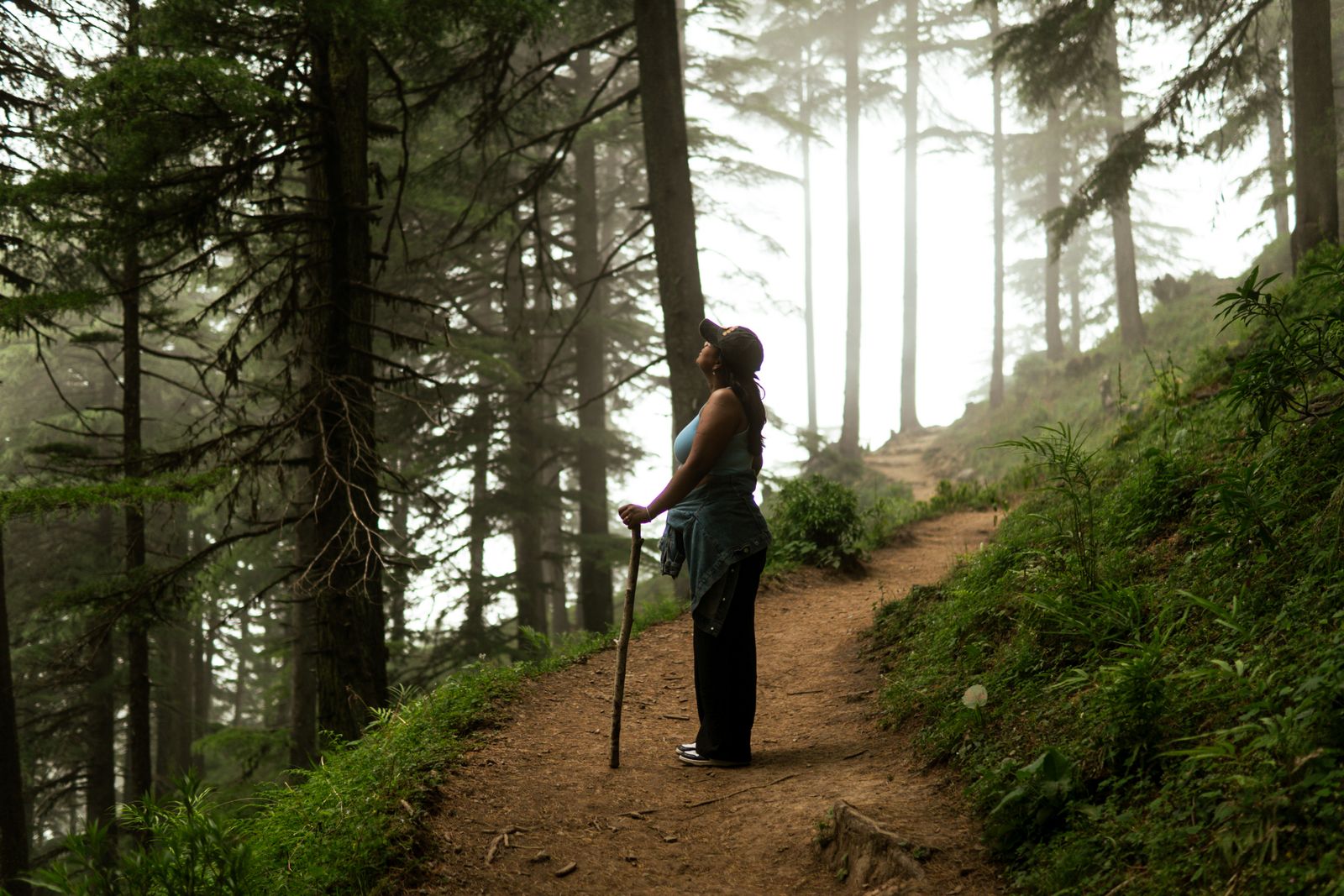
The catch is that most buying advice stops at “pick one you like.” That leaves the questions that actually decide whether a stick helps or annoys you. Which wood is strong without being heavy? How long should it be? Do you need one or two? Should an older hiker use a cane instead? And why does a hand-cut staff cost more than a folding aluminum pole?
This guide answers all of them. You will learn how a hiking stick differs from a walking stick and a hiking staff, which woods hold up best, how to size a stick in two minutes, when a collapsible walking stick makes more sense, and how to hold and swing your stick so it really saves your legs. At the end you will find seven proven picks by type and a full FAQ.
What Are Wooden Hiking Sticks, and How Do They Differ From Walking Sticks?
Shoppers meet four names for what looks like the same object: hiking stick, walking stick, hiking staff and trekking pole. The terms overlap in everyday speech, but they point to different lengths, grips and jobs. Getting them straight first saves you from buying a cane-height stick for a mountain trail, or a shoulder-high staff for a stroll around the neighborhood.
Wooden hiking sticks sit in the middle of that family. They are a single shaft of solid wood, usually between 48 and 58 inches long, with a rubber or carbide tip at the bottom and often a leather or paracord wrap where your hand rests. Most are held at about elbow height or a little above.
Hiking stick vs walking stick vs hiking staff
A walking stick is the broad, everyday term. It covers anything from a short, cane-like stick used on pavement to a long branch picked up at a trailhead. On flat ground most people hold a walking stick near hip or wrist height and use it mainly for rhythm and light balance.
A hiking stick is a walking stick built for trail use. It is longer, sturdier and usually tipped for dirt and rock. The longer shaft lets you choke down on steep climbs and reach ahead on descents.
A hiking staff is the tallest of the three. It often reaches your shoulder or the base of your neck, so you can grip it high or low as the slope changes. Long wooden staffs suit stream crossings, snow probing and anyone who likes a two-handed grip on steep ground.
Where trekking poles fit in
Trekking poles are the modern cousin. They come in pairs, adjust or fold, and are made from aluminum or carbon fiber. They are lighter than wood and pack away, but they bend or snap more easily when wedged between rocks, and the locks can slip.
| Type | Typical length | Grip height | Best for |
|---|---|---|---|
| Walking stick | 36 to 50 inches | Wrist to hip | Flat paths, light balance |
| Hiking stick | 48 to 58 inches | Elbow or a bit higher | Mixed trails, day hikes |
| Hiking staff | Base of neck or taller | Anywhere along the shaft | Steep ground, streams, snow |
| Trekking poles (pair) | Adjustable | Elbow at 90 degrees | Long miles, heavy packs |
In short, the difference between a hiking stick and a walking stick is mostly length and toughness. A walking stick is built for easy ground; a hiking stick or hiking staff is built for slopes, roots and rock.
Why Wooden Hiking Sticks Still Earn a Place on the Trail
Wood has stayed in hikers’ hands for centuries for practical reasons, not just nostalgia. Before you decide between wooden hiking sticks and a pair of poles, it helps to see what each material does well and where it falls short.
What the research says about sticks and your knees
The most cited evidence comes from a biomechanics study published in the Journal of Sports Sciences. Researchers measured eight men walking down a 25-degree ramp with and without poles. With poles, peak and average knee joint forces dropped by 12 to 25 percent, partly because hikers pushed on the poles and partly because they leaned forward slightly, which shortens the lever on the knee.
That study used two poles, so a single stick will not deliver the full effect. Still, the mechanism is the same: every pound you push into the shaft is a pound your knee does not absorb on the way down. Later work at Western Illinois University found the same pattern with hikers carrying light and heavy backpacks, with lower loads at the hips, knees and ankles.
Where wood beats aluminum and carbon
Wood flexes before it fails. When a carbon pole gets jammed between boulders and you fall onto it, it can shatter. A seasoned hickory shaft tends to bend like a bow and spring back. That resilience is why many long-time hikers keep a wooden staff for talus fields and rocky stream beds even if they own carbon poles.
Wood also has no moving parts. There are no twist locks to freeze, no lever clamps to loosen, and no sections to rattle. You can grip it anywhere along the shaft, swap hands without thinking, and lean on it at a viewpoint like a fence post.
A third advantage is cost over time. A solid wooden stick bought once can last decades with a little oil and a new tip now and then. Long-time users often report snapping carbon poles on rocky routes while the same hardwood staff keeps going year after year.
Disadvantages of using a walking stick
Wooden hiking sticks are not perfect, and it is worth knowing the trade-offs before you buy:
- Weight. A 55-inch hardwood stick usually weighs between about 1 and 1.5 pounds, roughly two to three times one carbon pole. Over a 15-mile day, your arm feels it.
- No collapse. A fixed stick cannot shrink for a scramble, a car trunk or an airline carry-on. You will hold it in one hand while climbing with the other.
- One side only. A single stick supports one side of your body. Two poles give a more even push and better balance on ice and loose scree.
- Moisture. Unfinished wood can swell, crack or rot if left wet. A sealed finish solves most of this.
- Snow. Few wooden sticks take a snow basket, so they punch deep into fresh powder.
There is also a human disadvantage. Leaning too hard on any stick can let your balance and leg strength slack off. Use it as a helper, not a crutch, unless a clinician has told you otherwise.
The Best Wood for a Hiking Stick
Hardness, density and shock resistance all matter, but no single number tells the whole story. A wood can be very hard yet brittle, or light yet surprisingly tough. The table below lists Janka hardness, the force needed to press a steel ball halfway into the wood, as a rough guide to how well each species resists dents and wear.
| Wood | Janka hardness (lbf) | Weight feel | Character on the trail |
|---|---|---|---|
| Hickory | about 1,820 | Heavy | Toughest common choice, high shock resistance |
| Hard maple | about 1,450 | Medium-heavy | Smooth, stiff, dense |
| White oak | about 1,360 | Medium-heavy | Strong, weather resistant, classic look |
| Ash | about 1,320 | Medium | Springy, tough, used for tool handles |
| Yellow birch | about 1,260 | Medium | Straight grain, easy to finish |
| Black walnut | about 1,010 | Medium | Beautiful, a bit softer |
| Black cherry | about 950 | Medium-light | Lovely color, best for easy paths |
| Poplar | about 600 | Light | Cheap, dents easily |
Hickory: the benchmark hiking staff wood
If you ask a stick maker for the best wood for a hiking stick, the answer is usually hickory. It tops the common hardwoods for hardness and is famous for absorbing shock, which is why it was used for wagon spokes, axe handles and early baseball bats. Kingfisher WoodWorks, a maker that has turned wooden staffs since 1986, builds its hiking staffs from Appalachian hickory for exactly this reason.
The trade-off is weight. Hickory is dense, so a long, thick staff gets heavy. Choose a slimmer diameter if you plan long days.
Ash, oak and maple: strong alternatives
Ash is the hiker’s middle ground. It is lighter than hickory, very springy, and forgiving when you load it hard. White oak is a little heavier and resists rot well, which makes it a good pick for wet climates. Hard maple is stiff and smooth but slightly less shock resistant, so it feels solid on flat trails and a touch harsh on rocky descents.
Lightweight and traditional options
Several lighter woods have devoted fans:
- Dogwood is dense and tough for its size, a traditional favorite in the American Southeast.
- Hazel grows straight and springy, making it the classic British and European hiking staff wood.
- Sassafras, cedar and pine are light and aromatic but softer, so they suit easy paths better than rocky ones.
- Bamboo is not wood at all but a grass. Thick-walled bamboo is strong, light and flexible, and it was famously used by backpacking writer Colin Fletcher.
The best wood for you depends on your trail. For rocky mountains and heavy loads, pick hickory or ash. For rolling forest paths and casual walks, a lighter species is more pleasant to carry all day.
How to Choose Wooden Hiking Sticks: Length, Diameter, Weight and Tips
Once you know your wood, four specs decide how a stick feels in your hand: length, diameter, weight and the tip. Getting them right matters more than brand.
Length: two simple sizing methods
For a straight hiking staff that you grip at different heights, a common maker’s rule is to measure from the small notch at the base of your neck (the jugular notch) down to the floor. That length gives you extra shaft above your hand for downhill reach and counterbalance.
For a hiking stick held at one main spot, use a height chart instead. One large American maker suggests these lengths:
| Your height | Suggested stick length |
|---|---|
| Under 4 ft 5 in | 41 inches |
| 4 ft 5 in to 5 ft 4 in | 48 inches |
| 5 ft 4 in to 5 ft 11 in | 55 inches |
| Over 5 ft 11 in | 58 inches |
Test the fit by standing in your hiking shoes and holding the stick at its grip. Your elbow should bend close to 90 degrees. If you are between sizes, choose the longer one, because a wooden stick can be trimmed from the bottom and re-tipped in minutes. You cannot add length back.
Diameter and grip
Most wooden hiking sticks run between about 15/16 inch and 1 1/4 inches thick. Slimmer shafts feel quicker and lighter, which helps smaller hands. Thicker shafts give a fuller grip and more strength for heavy users. If your fingers do not wrap comfortably around the shaft, it is too thick and will tire your forearm.
Grips come in three styles: bare wood, a leather or cork wrap, and a carved knob or handle. A wrap adds comfort and absorbs sweat. A knob on top lets you rest your palm on flat ground, much like a cane.
Weight: do the math before you buy
Weight depends on wood, length and thickness. Kingfisher publishes a handy formula: multiply the weight per inch by the length in inches. Its standard hickory at 15/16 inch weighs about 0.35 ounce per inch, so a 56-inch stick comes to roughly 20 ounces with its carbide tip. For a long day on the trail, aim for under about 1.5 pounds.
Tips, straps and finishes
- Rubber tip: quiet and grippy on pavement and rock slabs. Ideal if you also use the stick around town.
- Carbide or steel tip: bites into dirt, ice and wet roots. Many hikers carry a rubber cap to slip over it.
- Wrist strap: stops you dropping the stick on a scramble. Avoid straps that trap your wrist if you fall.
- Finish: an oil or polyurethane finish keeps moisture out. Bare bark looks rustic but needs more care.
Picking these details carefully is what turns a pretty stick into a dependable one. Pair it with the right clothing, too: a breathable layer like a good hiking hoodie keeps your arm cool when it is swinging a stick all day in the sun.
Collapsible Walking Stick and Folding Walking Sticks: When Portability Wins
A one-piece wooden stick is the strongest design, but it does not fit in a suitcase. If you fly to your hikes, ride public transport to trailheads, or want something to stash in a daypack, portability becomes the deciding factor.
Wooden traveler sticks
Some makers build a collapsible walking stick in wood by cutting the shaft into two or three sections joined with threaded brass or steel couplings. One reviewed example, a 55-inch twisted oak traveler stick, weighed about 1.25 pounds and broke down into three pieces each under 20 inches long. You give up a little stiffness at the joints but keep the warm feel of wood.
Check the joints when you buy. They should screw together tight with no wobble, and the threads should be metal rather than wood, which strips over time.
Folding walking sticks in aluminum or carbon
Folding walking sticks, sometimes sold as folding canes, use a shock cord inside hollow sections, like a tent pole. They fold down to roughly 12 to 15 inches and pop open in seconds. Most are aluminum with a foam or wooden derby handle.
These are excellent for travel, city walking, and as a backup in the car. They are less suited to rough trails because the cord joints flex and can pinch fingers. Telescoping trekking poles are the trail-ready version of the same idea.
Which portable option fits you
- Choose a threaded wooden traveler stick if you want the look and feel of wood and hike on moderate trails.
- Choose folding walking sticks if you mostly walk on paths and pavement and need the smallest packed size.
- Choose a telescoping trekking pole if you need length adjustment for steep, long mountain days.
A collapsible walking stick is a compromise, not a downgrade. For many travelers it is the only stick they will actually bring.
Walking Sticks for Women: Fit, Weight and Grip
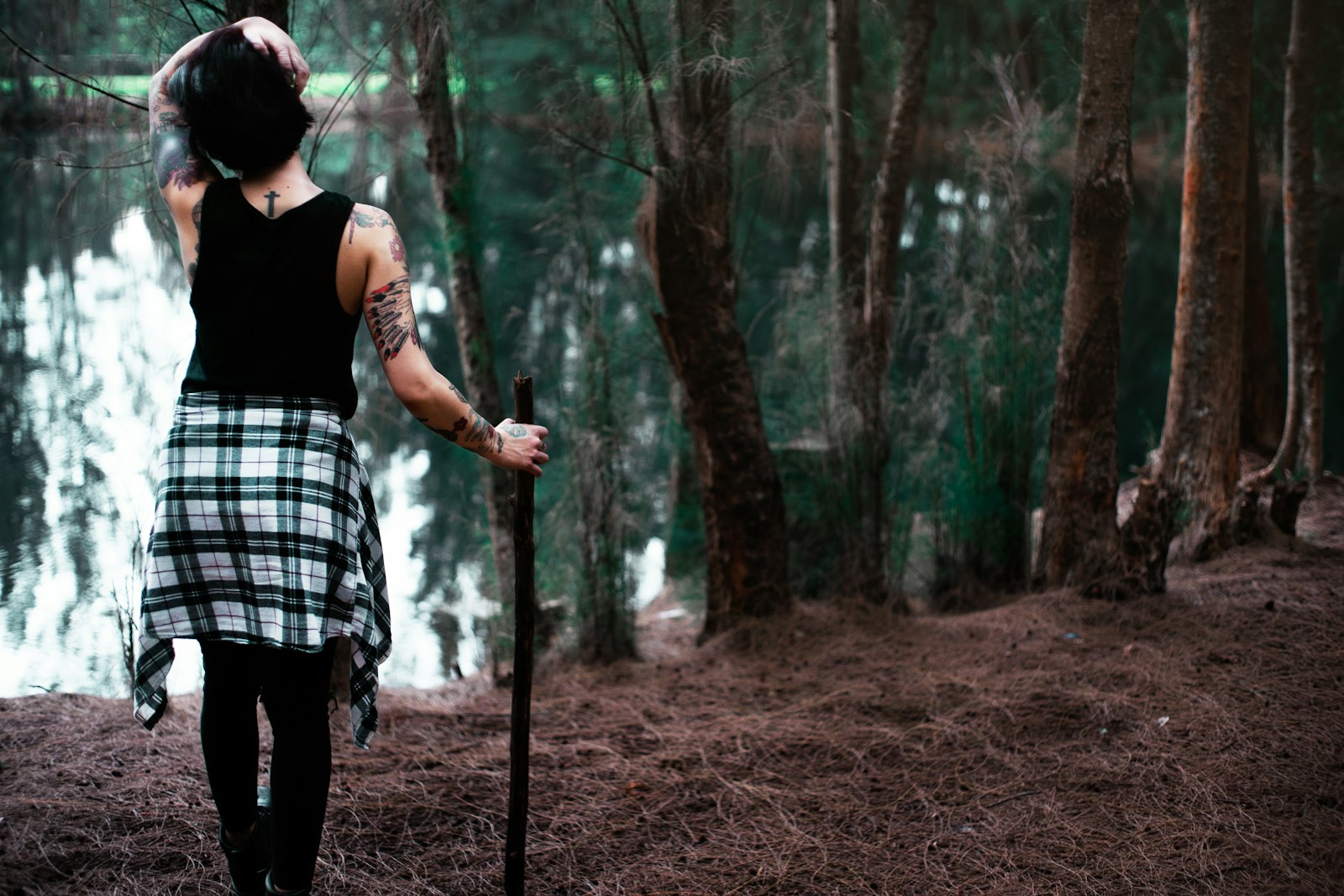
Walking sticks for women are not a separate category of wood, but fit details matter more for hikers with shorter height, narrower hands or lighter frames. Many sticks are sized for a 5-foot-10 man by default, so a little attention up front makes a big difference on the trail.
Get the length right first
Use the height chart above. Many women between 5 feet 0 and 5 feet 4 inches end up with a 48-inch stick, while taller hikers suit 55 inches. One buyer of a 48-inch hickory stick trimmed 3 inches off for a 5-foot-4 partner and simply moved the rubber tip, which shows how easy it is to fine-tune wood.
Keep it light and slim
A slimmer diameter, around 15/16 inch, is kinder to smaller hands and reduces fatigue. Lighter woods such as ash, birch or a slim hickory sapling keep the weight closer to 1 pound. If you plan long days, test the stick by holding it out in front of you for a minute. If your wrist complains in the store, it will complain on the trail.
Grip, strap and style
Walking sticks for women often feature a contoured knob, a cork wrap or a padded leather grip, all of which spread pressure across the palm. An adjustable wrist strap helps on climbs. Color and carving are personal, and a beautiful stick you love to carry is one you will actually use.
Your stick works best with clothing that moves with you. Our guide to womens hiking shorts covers inseams and fabrics that pair well with a long day of stick-assisted climbing.
Cane or Walking Stick? Choosing a Wooden Walking Stick Cane
If you have a sore knee, a hip problem or shaky balance, you may wonder whether a cane is better than a walking stick. The honest answer is that they do different jobs, and the right one depends on why you need support.
How a cane and a walking stick differ
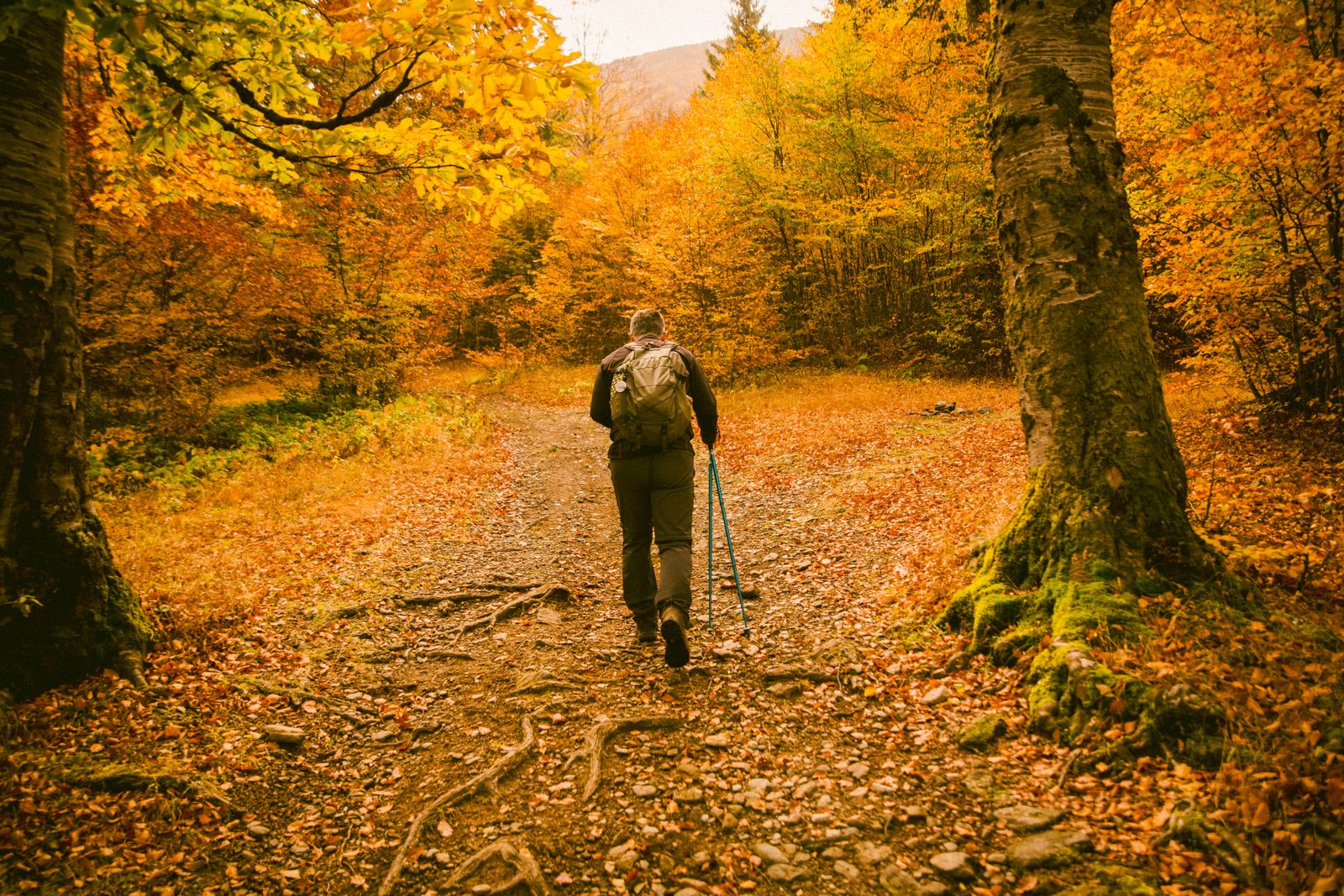
A cane is shorter, reaching about your wrist crease, and has a curved or derby handle that lets you press straight down. It is designed to take weight off a weak or injured leg on flat ground. A walking stick is longer, held higher, and is mostly for balance, rhythm and reach on uneven terrain.
A wooden walking stick cane blends the two: a cane-height shaft with a crook or T-handle, made from steam-bent ash, hickory or chestnut. It is a lovely option for park paths, gentle country lanes and town walks.
Which one should you choose?
- Choose a cane if a clinician has recommended one, or if you need to unload a painful leg with each step.
- Choose a walking stick if your legs are healthy and you want balance on roots, gravel and slopes.
- Choose a wooden walking stick cane if you want cane-style support on easy terrain with the look of traditional wood.
Medical guidance on cane fit is consistent. The Mayo Clinic advises that the top of the cane should let your elbow bend slightly, at about 15 to 30 degrees, and that a cane that is too short will make you lean to one side.
Which hand should hold a walking stick?
For a cane used to support an injured or weak leg, hold it in the hand opposite the sore leg, and move it forward at the same time as that leg. If your left knee hurts, the cane goes in your right hand. This mirrors your natural arm swing and shifts weight away from the painful side.
For a hiking stick used for balance only, most people hold it in their non-dominant hand, which leaves the dominant hand free for a camera, a map or a branch. On side-hill trails, switch the stick to the downhill hand so it catches you if your foot slips.
One Stick or Two? How to Use a Hiking Staff Well
The question of one versus two comes up on every trail forum. The short answer: two poles give more total support, while one wooden stick gives a free hand and a simpler rhythm. Your terrain and your knees decide which matters more.
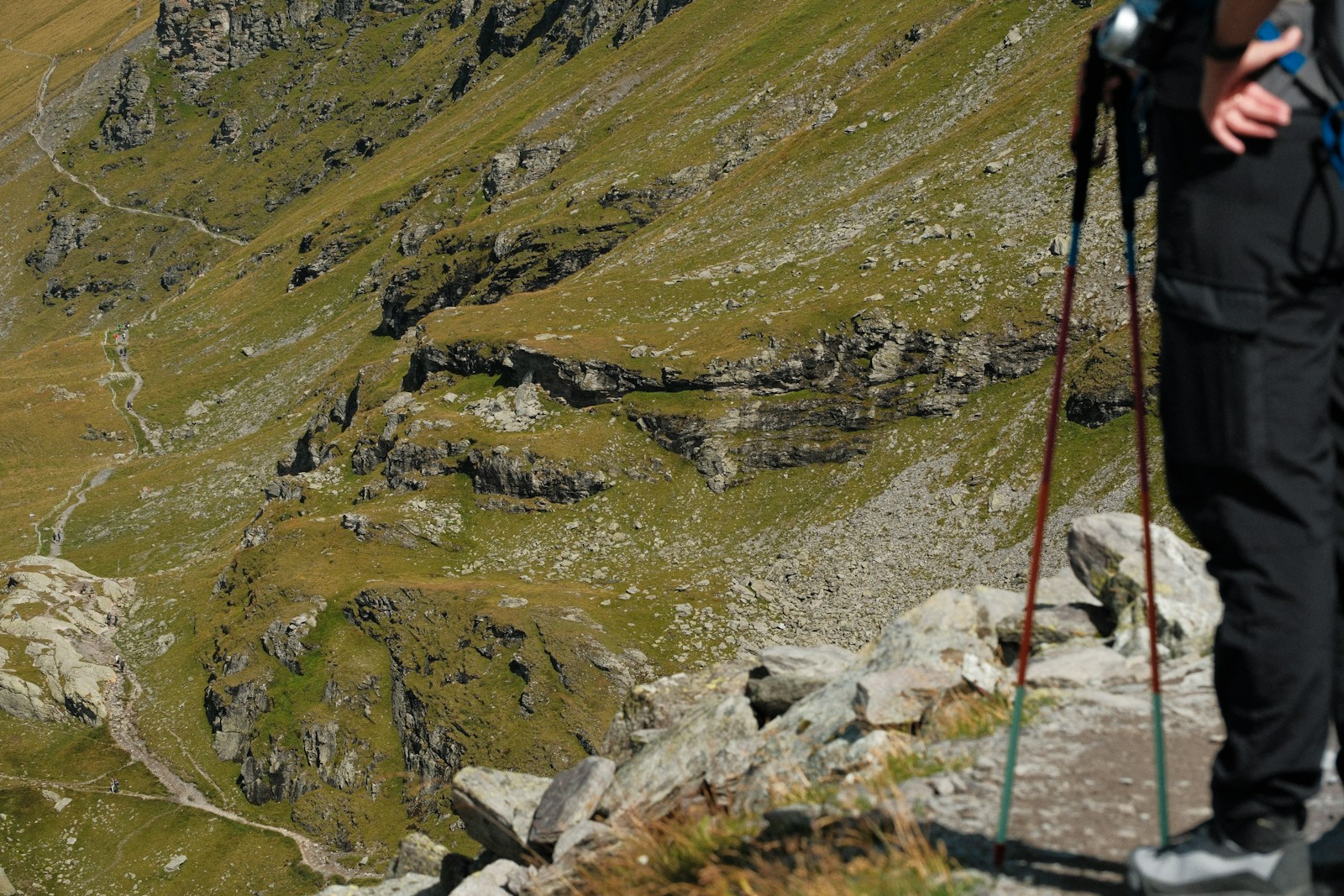
When one hiking stick is enough
A single stick shines on day hikes, gentle hills, forest paths and any outing where you want a hand free for photos or a dog leash. It is also simpler to manage at stream crossings, where you plant the stick upstream and move one foot at a time. Many long-time hikers prefer one staff held at a cane-like height because the rhythm feels more natural.
When two poles make more sense
Choose two poles if you carry a heavy backpack, have knee trouble, hike long descents, or cross snow and scree. The research showing a 12 to 25 percent drop in knee loading used two poles, and balance is better when support is spread evenly on both sides. Some hikers carry a wooden staff on easy days and switch to two poles for big mountain trips.
Technique on climbs, descents and streams
- Uphill: shorten your grip by choking down on the shaft, and plant the tip just ahead of your lead foot. Push down and back as you step up.
- Downhill: grip higher on a hiking staff, or lengthen your reach, and plant the tip ahead and slightly below you before you step down. This is where the knee savings happen.
- Flat ground: swing the stick with the opposite arm and leg, as you would naturally walk, and tap it lightly rather than leaning on it.
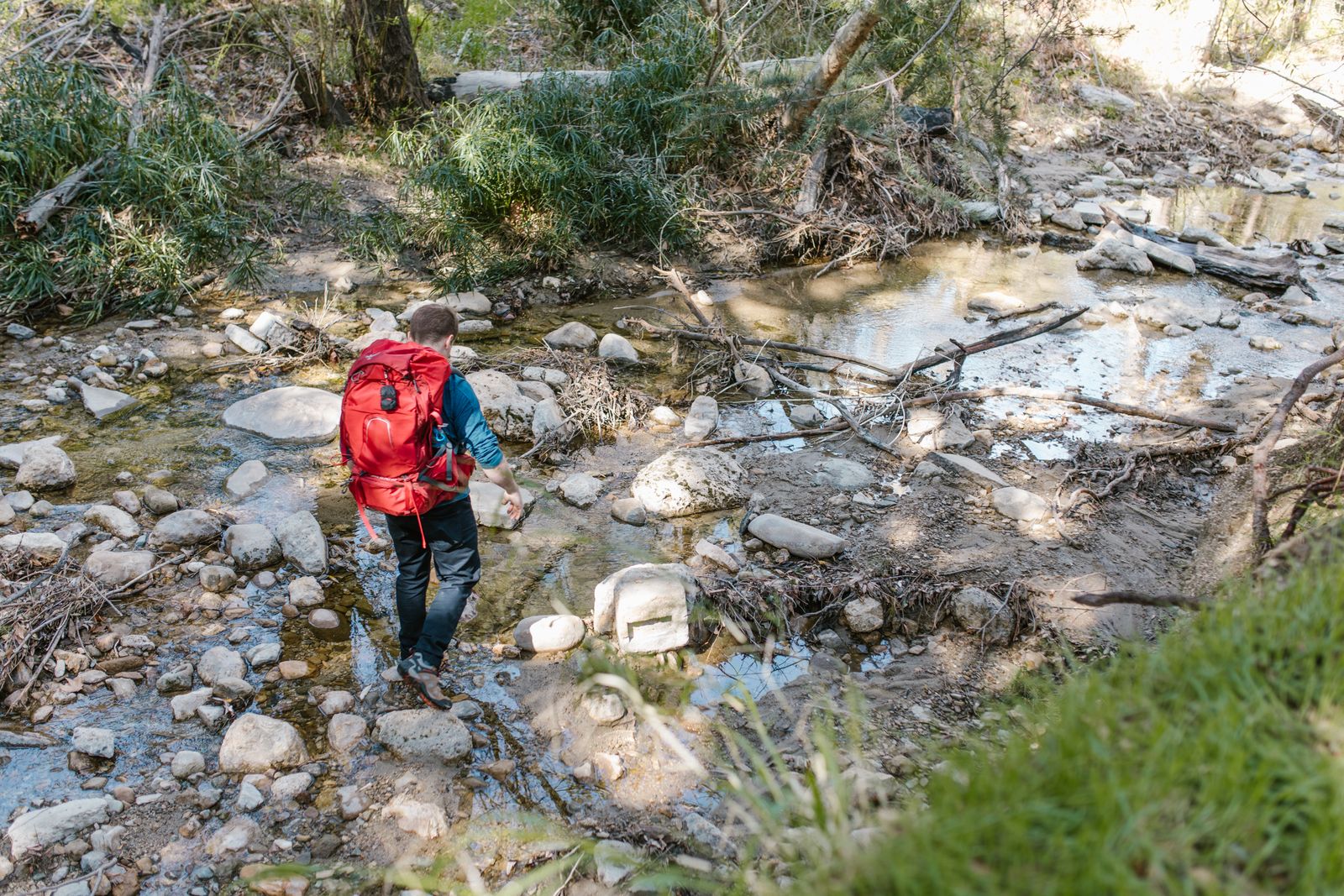
- Stream crossings: face upstream, plant the stick first, then move one foot at a time so you always have two points of contact.
Do you really need a hiking stick?
Not every hiker does. Healthy hikers on short, smooth trails may never miss one. But a stick is worth carrying if you hike steep or rocky routes, cross water, carry a pack, are recovering from an injury, or simply want more confidence on loose ground. It costs little, weighs about as much as a water bottle, and can turn a nervous descent into a steady one.
Best Wooden Hiking Sticks: 7 Proven Picks by Type
There is no single best stick, because the right one depends on your height, terrain and budget. Instead of ranking models that change every season, here are seven proven types of wooden hiking sticks and who each suits. Within each type, look for straight grain, tight joints and a sealed finish.
1. Straight hickory hiking staff
The workhorse. A straight, uniform hickory staff lets you move your hand up or down as the slope changes and swap hands freely. Makers such as Kingfisher WoodWorks sell them in custom lengths and two diameters. Best for rocky mountains, heavy users and hikers who want a stick for life.
2. Twisted hickory sapling stick
A sapling that grew around a vine develops a natural spiral that looks striking and gives your hand ridges to grip. Brazos Walking Sticks, made in Texas, is one long-running maker of this style. These sticks are tough and rustic, with a knob or carved handle on top. Best for day hikes and hikers who value character.
3. Ash or white oak trail stick
Lighter than hickory but still very strong, ash and oak sticks are an excellent all-round choice. They are springy, comfortable and widely available with leather wraps. Best for mixed trails and hikers who want balance between strength and weight.
4. Lightweight hazel, birch or bamboo stick
When weight matters most, a straight hazel or birch stick, or a thick-walled bamboo staff, keeps things light without feeling flimsy. Best for long, gentle walks, older hikers and anyone shopping for walking sticks for women who prefer a slim, light shaft.
5. Threaded wooden traveler stick
A collapsible walking stick in wood, with two or three sections and metal couplings. You lose a little stiffness but gain a stick that fits in a suitcase. Best for travelers and anyone who uses public transport to reach trails.
6. Wooden walking stick cane with derby or crook handle
Cane-height, steam-bent wood with a curved handle for downward pressure. Best for town walks, park paths and people who need light weight-bearing support on easy terrain.
7. Hand-carved artisan hiking staff
One-of-a-kind staffs carved, wood-burned or inlaid by craftspeople. They cost more but carry real heirloom value. Best as a gift or for hikers who want a stick that tells a story.
Why are hiking sticks so expensive?
A plain wooden stick can cost as little as about $25, while a hand-cut hickory staff can cost several times that. The price reflects real work:
- Harvesting and drying. Small makers often air-dry saplings for six months or more before shaping them, so the wood does not warp or crack.
- Waste. Many staffs are rejected for twists, knots or hidden checks, and the good ones carry that cost.
- Hand work. Carving, sanding, finishing and wrapping are mostly manual and slow.
- Hardware. Carbide tips, brass ferrules and threaded couplings add cost.
- Small batches. Most wooden stick makers are small workshops, not factories.
Carbon trekking poles are expensive for other reasons: aerospace fibers, precision locks and research. A good wooden stick is often cheaper over its lifetime because it can last for decades.
Caring for Wooden Hiking Sticks So They Last
A wooden stick that gets a few minutes of care each season will outlive most of your other gear. Neglected, it can crack, swell or lose its grip.
After every wet hike
Wipe the stick dry and let it air out at room temperature, standing upright. Avoid drying it next to a heater or fire, which can split the wood. Remove the rubber tip occasionally so trapped water can escape from the end grain.
Once or twice a year
- Lightly sand rough spots with fine sandpaper, working along the grain.
- Rub in a thin coat of boiled linseed oil, tung oil or a maker’s finish oil, then wipe off the excess.
- Check the tip and ferrule for wear, and replace worn rubber tips before they split.
- Inspect for cracks near the tip and the grip, where stress concentrates.
Can you make your own hiking stick?
Yes, and plenty of hikers prefer it. The safest source is a sapling or branch from a recent storm, a tree service or your own property, never live wood cut from a park or trail, where it is often prohibited. Look for a straight piece about 1 to 1 1/4 inches thick with few knots.
- Strip the bark with a knife, cutting from bark toward wood so it does not peel too deep.
- Let the stick dry slowly indoors for several months so it does not crack or warp.
- Sand it smooth, seal it with oil or polyurethane, and fit a rubber or metal tip.
- Wrap a section with paracord or leather where your hand naturally falls.
A homemade stick will rarely be as uniform as a shop-made hiking staff, but it costs almost nothing and carries a story from the first step.
Storage and travel
Store your hiking staff upright or flat in a dry room, not in a damp garage or a hot car. For travel, slip a fixed stick into a padded ski bag or a fishing rod tube, or choose a collapsible walking stick that fits your luggage. A wide-brim sun hat from our list of the best hiking hats can ride on the same rack as your staff, so both are ready for the next trip.
Wooden Hiking Sticks FAQ
What is the difference between a hiking stick and a walking stick?
A walking stick is the general term for any single stick used for balance, often shorter and used on flat ground. A hiking stick is a longer, tougher walking stick made for trails, with a trail tip and enough length to choke down on climbs and reach ahead on descents.
What is the best wood for a hiking stick?
Hickory is the best wood for most wooden hiking sticks because it combines high hardness with excellent shock resistance. Ash and white oak are strong, slightly lighter alternatives, while hazel, birch and bamboo suit hikers who want a light stick for gentle paths.
Do you need 1 or 2 hiking sticks?
One stick is enough for day hikes, gentle hills and when you want a free hand. Two poles are better with a heavy pack, on long descents, on snow or scree, and if you have knee problems, because they spread support evenly on both sides.
What are the disadvantages of using a walking stick?
A walking stick adds weight, keeps one hand busy, supports only one side of your body and, if made of wood, cannot collapse for scrambles or travel. Unsealed wood can also crack or swell when wet, and relying on a stick too much may let your balance skills slip.
Is it better to walk with a cane or a walking stick?
A cane is better if you need to take weight off an injured or weak leg on flat ground. A walking stick is better for balance and reach on trails and uneven terrain. A wooden walking stick cane is a good middle ground for easy paths.
Which hand should hold a walking stick?
For a cane supporting a sore leg, hold it in the hand opposite that leg and move them together. For a balance-only hiking stick, use your non-dominant hand on flat ground, and switch to the downhill hand on side-hill trails.
What type of hiking stick is best?
For most hikers, a straight hickory or ash hiking staff with a carbide tip and a rubber cap is the most versatile choice. Travelers should look at a collapsible walking stick, and casual walkers may prefer a lighter cane-style stick.
Why are hiking sticks so expensive?
Quality wooden sticks take months of drying, careful selection, hand carving and finishing, plus hardware like carbide tips and metal couplings. Most are made in small workshops, so labor drives the price. Many still cost less than a premium pair of carbon trekking poles.
Do I really need a hiking stick?
You do not need one for short, smooth trails if your legs and balance are good. A stick is worth it on steep or rocky ground, at stream crossings, with a heavy pack, after an injury, or whenever you want extra confidence on loose surfaces.
Should I use one or two hiking poles?
Use two poles when you want the most support, especially on big descents and with a heavy backpack. Use one pole or a single hiking staff when you value a free hand, a simpler rhythm and lighter carry on moderate terrain.
Final Thoughts
The right stick is less about the price tag and more about the match between wood, length and the ground under your boots. Wooden hiking sticks earn their place because they are tough, simple and quietly helpful on every descent. Hickory and ash lead the pack for strength, a correct length matters more than any brand name, and one stick or two comes down to your knees, your pack and how many hands you want free.
Your next step is simple: measure your height in hiking shoes, pick the length from the chart above, and choose a wood that suits your usual trail. Then take it on your next hike and plant it before every step down.
A good stick tends to collect memories along with scratches. Give it a little oil each season, and the one you buy now may still be walking beside you decades from now.